
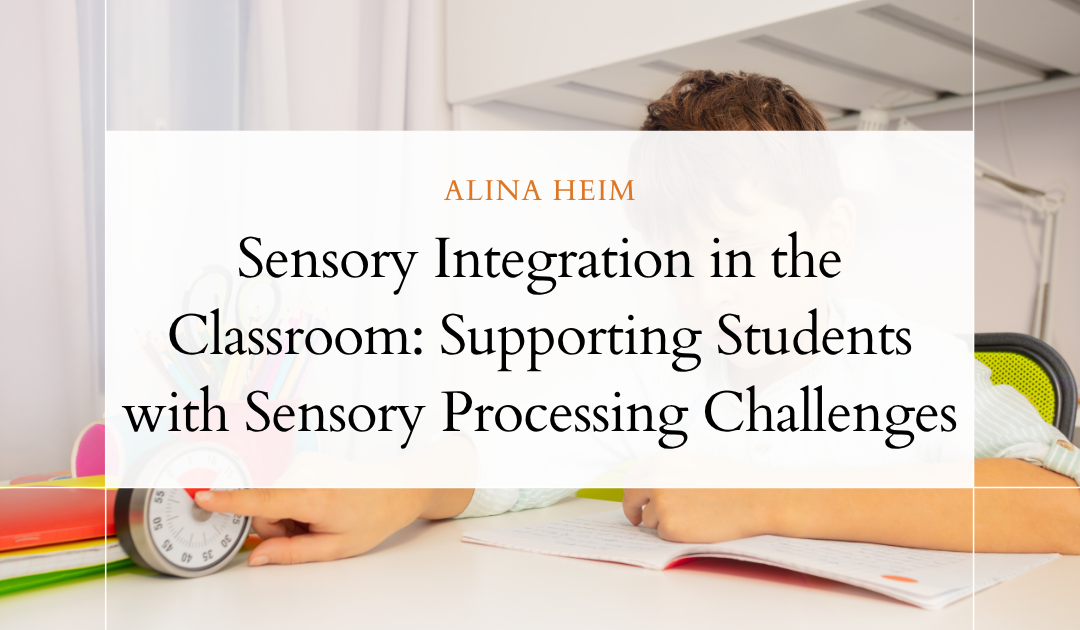
Sensory integration plays a crucial role in how students interact with and process the world around them. In the classroom, students with sensory processing challenges may struggle with stimuli such as noise, lights, textures, or movement, which can impact their focus, behavior, and learning. Educators equipped with knowledge and strategies to support sensory integration can create more inclusive and effective learning environments.
What is Sensory Integration?
Sensory integration refers to the way the nervous system receives messages from the senses and turns them into appropriate motor and behavioral responses. When this process is disrupted—known as Sensory Processing Disorder (SPD)—a student may become over- or under-responsive to sensory input.
Students may experience:
- Hypersensitivity (over-responsive): Easily overwhelmed by sounds, lights, or touch.
- Hyposensitivity (under-responsive): Craves movement, pressure, or stimulation.
- Sensory-seeking behaviors: Fidgeting, chewing, or constant motion.
Recognizing Sensory Processing Challenges
Common signs in the classroom may include:
- Covering ears or eyes
- Avoiding certain textures or foods
- Difficulty sitting still or staying focused
- Meltdowns triggered by sensory overload
- Constant movement or touching objects
- Poor coordination or clumsiness
Understanding that these behaviors are not intentional but responses to sensory discomfort is key to responding with empathy and support.
Strategies to Support Sensory Integration
- Create a Sensory-Friendly Environment
- Use natural lighting or dimmable lights to reduce glare.
- Offer noise-canceling headphones or quiet zones.
- Minimize visual clutter on walls and desks.
- Incorporate Movement Breaks
- Schedule regular sensory or brain breaks.
- Integrate movement into lessons (e.g., standing math games, walking while reading).
- Use tools like yoga balls, wobble cushions, or resistance bands for seated movement.
- Offer Sensory Tools and Supports
- Provide fidget tools, chewable jewelry, weighted blankets, or lap pads.
- Allow access to sensory bins or textured materials.
- Set up a calming corner with soft lighting and quiet activities.
- Adapt Classroom Routines and Expectations
- Offer flexible seating or alternative workspaces.
- Allow students to complete tasks standing or lying on the floor.
- Provide options for nonverbal communication or sensory-friendly transitions.
- Collaborate with Specialists
- Work with occupational therapists (OTs) to create sensory diets.
- Seek guidance on appropriate tools, accommodations, and interventions.
- Educate and Empower Students
- Teach self-awareness and self-regulation skills.
- Use visual schedules or sensory cue cards.
- Encourage students to advocate for their sensory needs.
Benefits of Sensory Integration Support
- Improved Focus: Students are better able to attend and participate in lessons.
- Reduced Behavioral Challenges: Meeting sensory needs decreases frustration and disruptive behaviors.
- Enhanced Self-Regulation: Students learn tools and strategies to manage their own sensory input.
- Inclusive Learning Environment: All students benefit from a sensory-aware classroom.
Conclusion
Supporting sensory integration in the classroom is not just a special education practice—it is a universal approach that promotes inclusion, empathy, and academic success. By recognizing sensory challenges and implementing thoughtful accommodations, educators can transform classrooms into spaces where every student feels safe, supported, and ready to learn. Sensory-friendly practices are a cornerstone of effective, compassionate teaching for all learners.